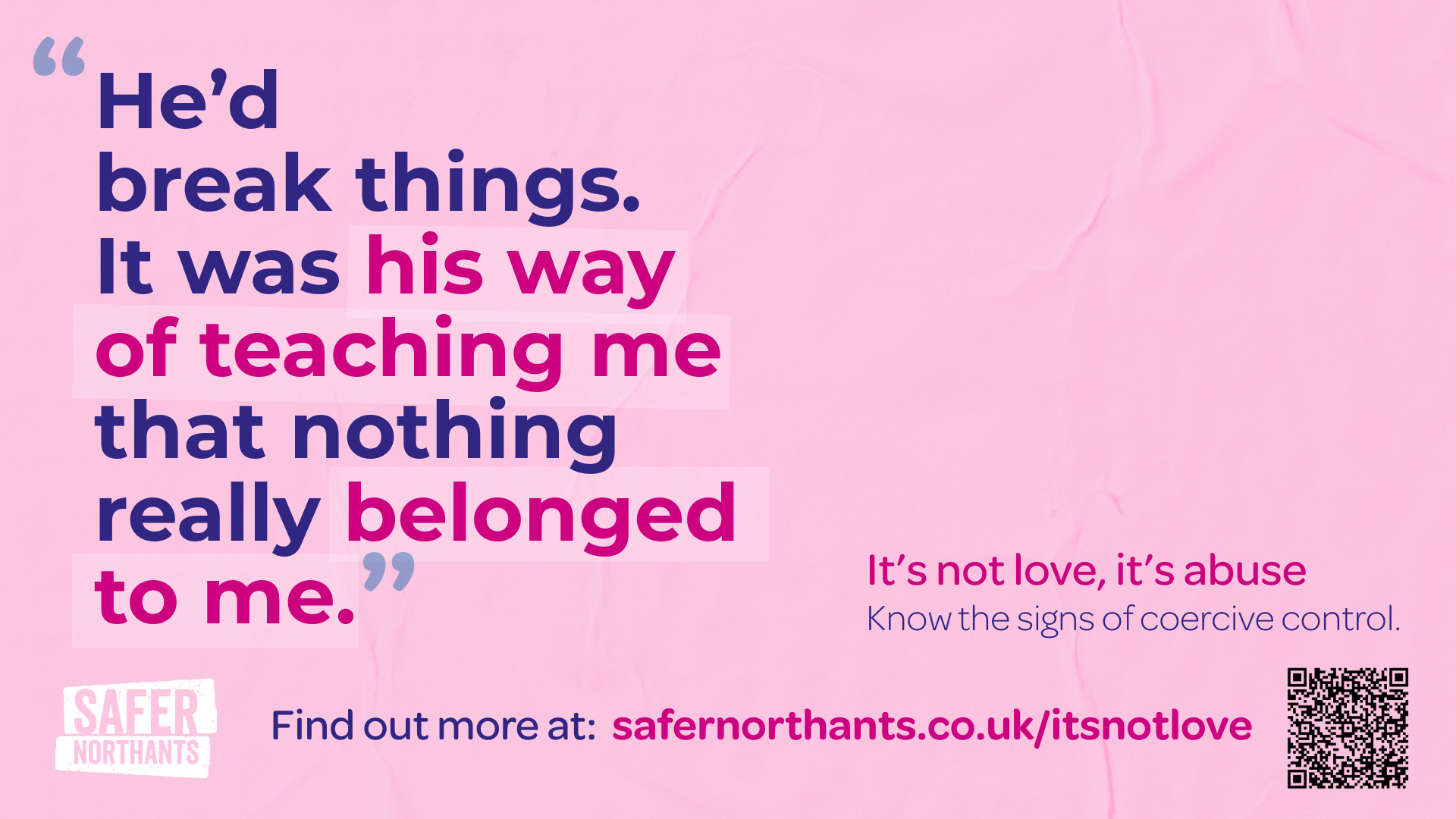
The Northamptonshire Serious Violence Prevention Partnership (NSVPP) has launched a campaign to bring awareness to the signs of coercive and controlling behaviour (CCB).
Called It’s Not Love, It’s Abuse, the campaign centres on three in-depth video interviews, using the words of victim-survivors who are portrayed by actors to tell their stories.
Through the stories of Anne, Paul and Louise, the campaign shows how coercive control develops, impacting a person’s confidence and independence.
Over the coming weeks, these stories will be shared to highlight how coercive control can take hold, why it can be difficult to recognise, and why early awareness matters.
What is coercive and controlling behaviour?
Coercive control is a pattern of behaviour where someone repeatedly controls, intimidates, or isolates a person. It often starts gradually with behaviours appearing minor in isolation. Over time these behaviours build into a pattern that causes someone to feel anxious, withdrawn and completely dependent on the person harming them.
It is important to know that coercive control is a criminal offence, but it can often be difficult for the person experiencing it to recognise the behaviour.
The behaviour you see may be justified or explained away and can appear at first as caring or personality differences.
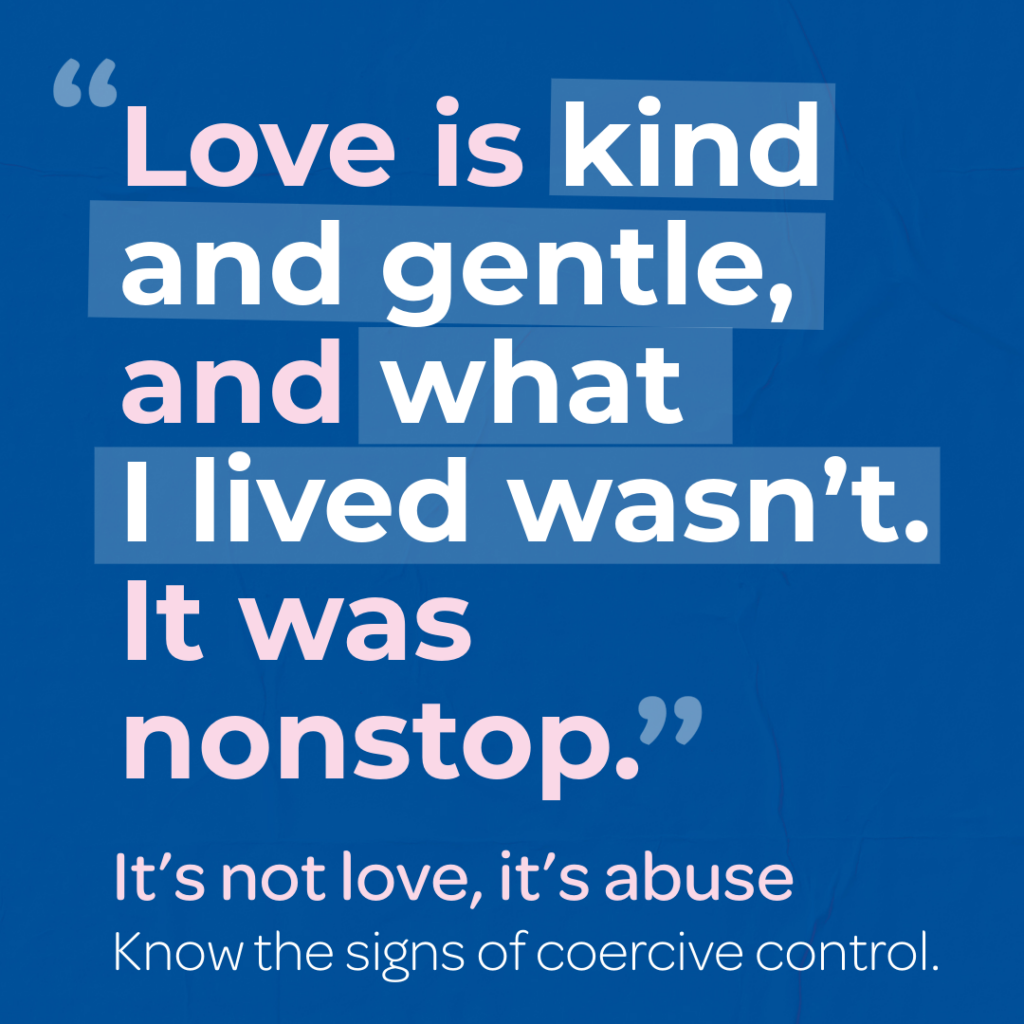
Recognising the signs of Coercive and Controlling Behaviour
Friends, family members, and colleagues are often the first to notice changes in someone’s behaviour. In the workplace, this might show up as changes in confidence, attendance, focus, or engagement.
By increasing our awareness of the signs of coercive control, we can:
- Recognise when something doesn’t feel right
- Gently check in with someone who may be struggling
- Share information about support when it’s needed
For more information on how to spot the signs of coercive control and helpful toolkits for families and contact details of support services, please visit the website: www.safernorthants.co.uk/itsnotlove